What Good Spanish Speaking Practice Looks Like
Useful speaking practice has three parts: retrieval, production, and correction. Retrieval means pulling words from memory instead of rereading them. Production means forming your own sentences out loud. Correction means noticing what was unclear, unnatural, or mispronounced before it becomes a habit.
For most adult learners, 10-15 minutes a day is more sustainable than one long weekly session. A strong session might include 3 minutes of flashcard recall, 7 minutes of AI conversation, 3 minutes of pronunciation work, and 2 minutes reviewing missed phrases.
How to Practice Speaking Spanish in Science Based Learning
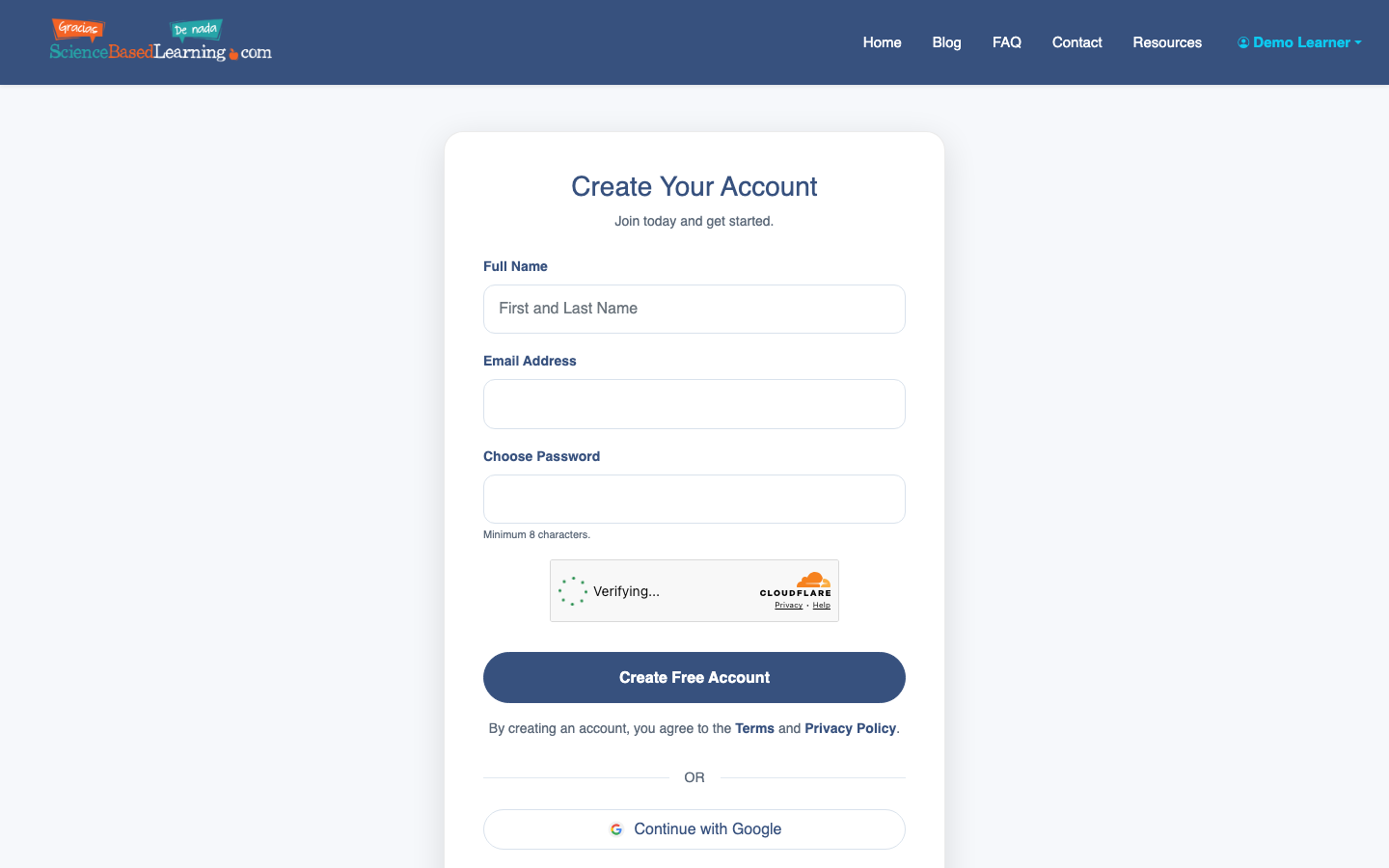
- Create your free account
Start on the registration page and create an account with email and password, or use Google OAuth. You will verify your email before using the full learning flow, which keeps your progress tied to your account before you download and subscribe in the iOS app.
- Choose Spanish and your CEFR level
Select Spanish as your study language, then choose the level closest to your current ability. If you are unsure, start slightly lower. Speaking practice works best when the topic is easy enough that you can answer without stopping every two words.
A1-A2 learners should focus on introductions, daily routines, food, travel, directions, and simple opinions. B1-B2 learners can practice stories, plans, work situations, comparisons, and problem-solving. C1-C2 learners should push into nuance: disagreement, humor, abstract topics, and register.
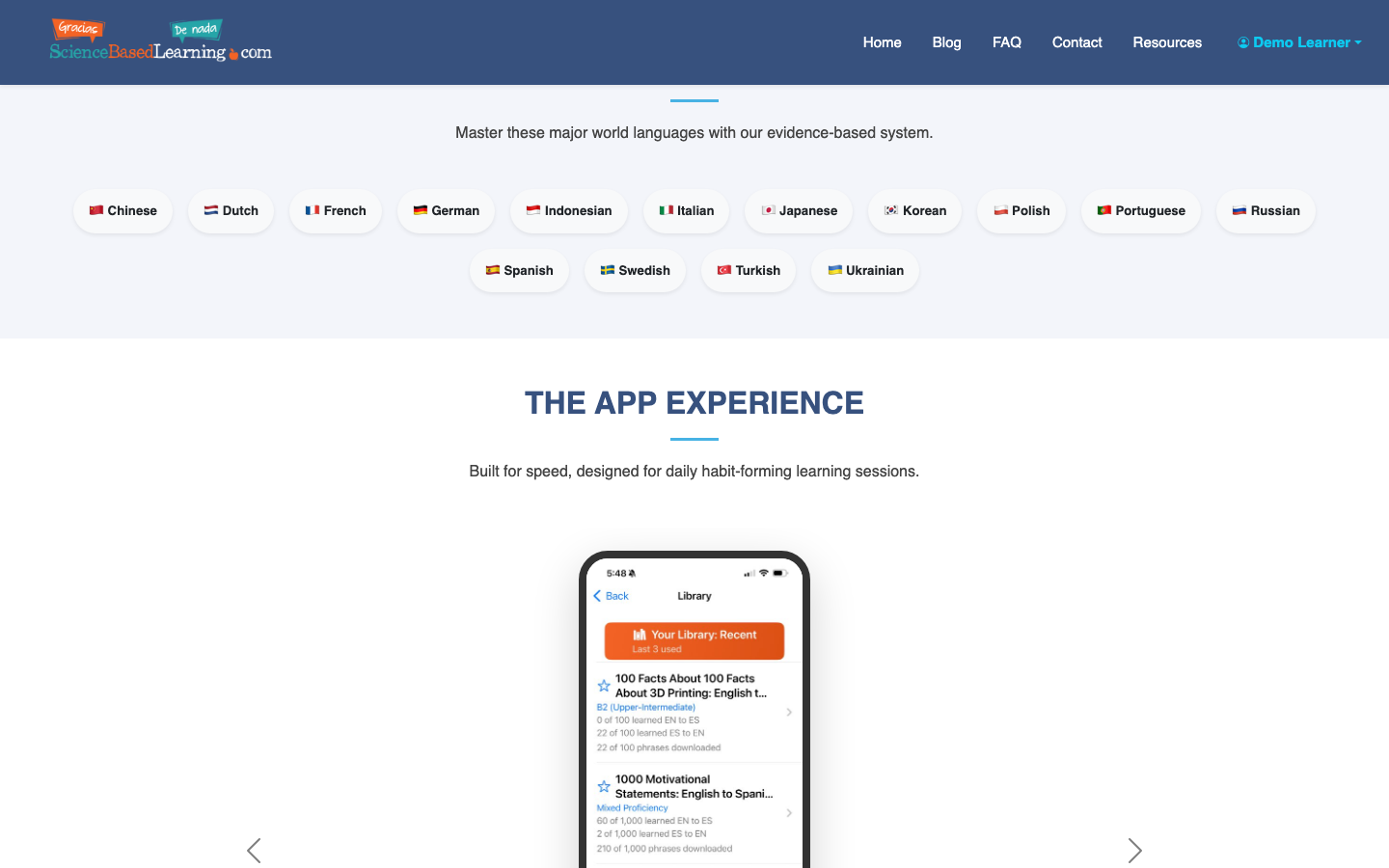
- Warm up with spaced-repetition flashcards
Before starting a conversation, review Spanish flashcards for a few minutes. Do not just mark whether you recognize the word. Say the answer aloud, then use it in a sentence.
For example, if the card is “aunque,” say: “Aunque estoy cansado, quiero practicar.” That one extra sentence turns vocabulary review into speaking preparation.

- Start an AI conversation practice session
Open the AI conversation practice tutor and pick a scenario that matches your level. Good beginner prompts include ordering coffee, checking into a hotel, or introducing yourself. Strong intermediate prompts include explaining a problem, giving advice, or describing a past trip.
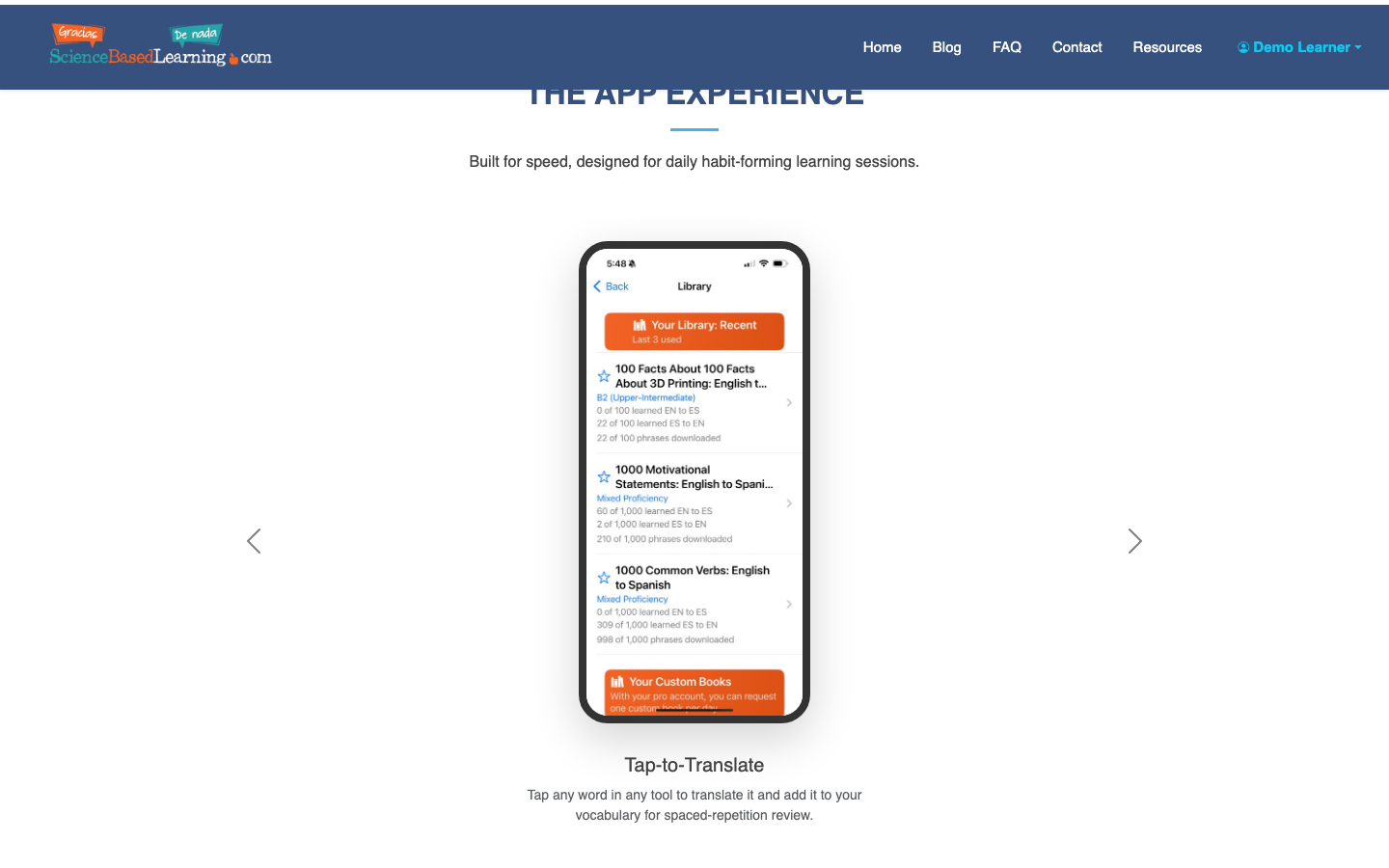
Keep the session narrow. Instead of trying to “talk about anything,” choose one practical situation and repeat it with small changes. For example:
- Round 1: order coffee politely
- Round 2: ask for oat milk and no sugar
- Round 3: explain that the order is wrong
- Round 4: ask whether you can pay by card
This repetition is not boring; it is how fluency forms. You are reducing the thinking load around common structures so you can focus on meaning.
- Answer in complete sentences first, then shorten naturally
When you practice Spanish conversation, start with complete answers: “Quiero practicar porque voy a viajar a México en julio.” Once the structure feels easy, make it more natural: “Porque viajo a México en julio.”
Complete sentences expose grammar gaps. Short answers build real conversational rhythm. You need both.
- Use pronunciation feedback for the phrases you will actually say
Pronunciation practice should not be random. Pick 5-8 phrases from your conversation session and repeat them with microphone feedback. Focus especially on sounds English speakers often flatten, such as the Spanish tapped r, vowel clarity, and syllable stress.
Useful phrases to drill include:
- “Me gustaría...”
- “No estoy seguro, pero...”
- “¿Podrías repetirlo más despacio?”
- “Lo que quiero decir es...”
- “Desde mi punto de vista...”
- Review missed phrases the next day
After a speaking session, save or note the phrases that slowed you down. Add them to your next daily review instead of starting from scratch. Your goal is not to have a perfect conversation once; it is to make common Spanish responses easier every week.
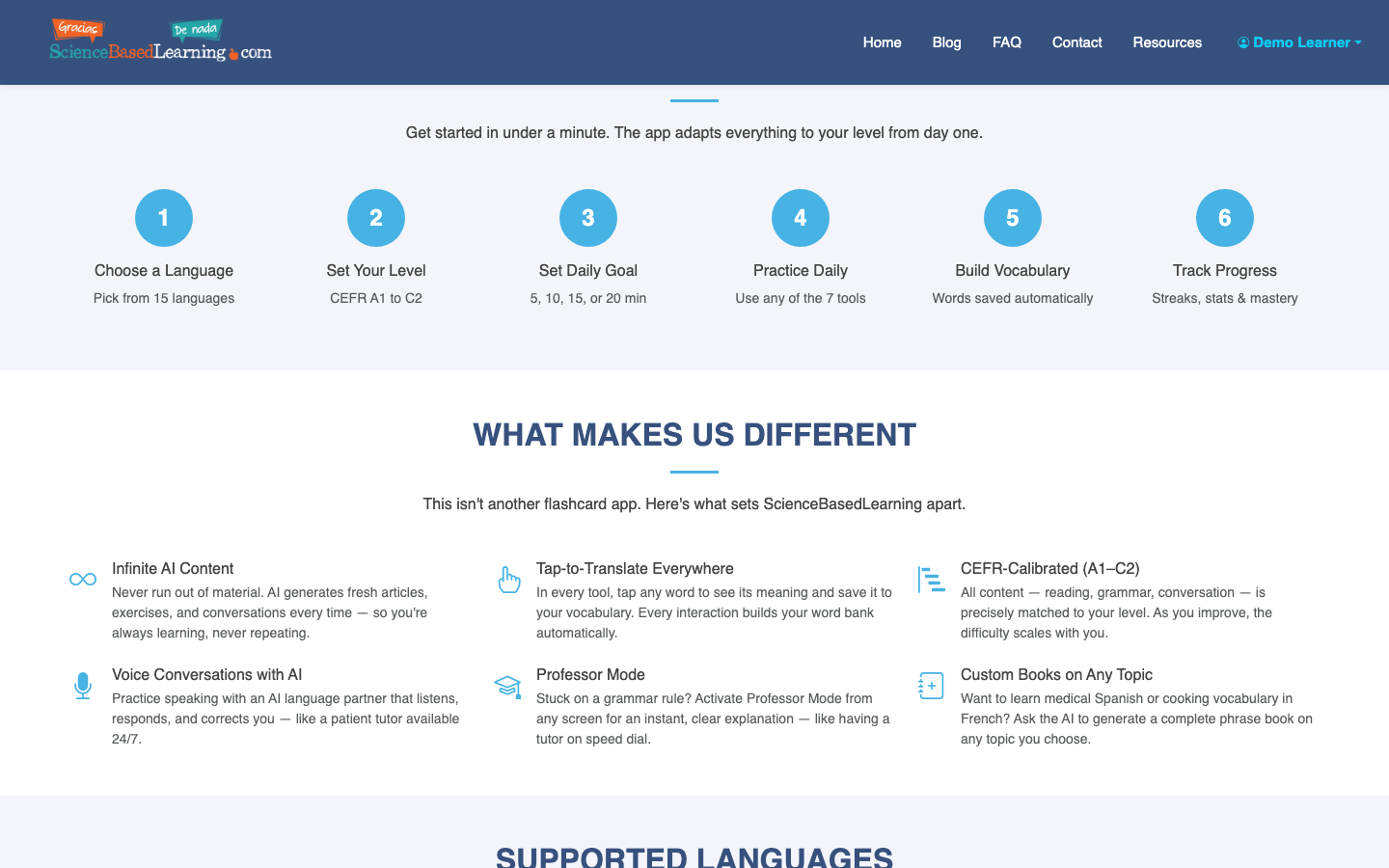
A Simple Weekly Spanish Conversation Plan
Use this structure if you want a practical routine without overthinking it:
- Monday: introductions and personal background
- Tuesday: food, ordering, preferences, and prices
- Wednesday: directions, transit, and travel problems
- Thursday: past tense stories about your week
- Friday: opinions, comparisons, and recommendations
- Saturday: free conversation on hobbies or plans
- Sunday: review the phrases that caused hesitation
If your bigger goal is speed, pair this speaking routine with the broader strategy in How to Learn Spanish Fast. If you are comparing methods across languages, the framework in How to Learn a Language Fast is useful too.
How to Make Spanish Conversation Practice Feel More Real
App practice is strongest when you connect it to real situations. Before a trip, rehearse hotel, restaurant, pharmacy, and transportation scenarios. If you are learning for school, practice explaining opinions, summarizing readings, and asking follow-up questions. If you are learning for family or community, rehearse greetings, stories, and everyday questions.
You can also record yourself once a week for 60 seconds. Pick a simple prompt like “What did I do this weekend?” or “What am I planning next month?” Listen once for grammar, once for pronunciation, and once for pauses. Do not try to fix everything. Choose one improvement for the next session.
Common Mistakes to Avoid
The biggest mistake is waiting until you “know enough” to speak. If you can say ten sentences, you can start practicing conversation. Keep the topic small and repeat it until it feels usable.
Another mistake is relying only on passive input. Listening drills and reading comprehension are valuable, but they do not replace producing Spanish under light pressure. Use them to feed your speaking practice, not as a substitute for it.
Finally, avoid switching topics too quickly. Staying with one scenario for several rounds gives your brain time to automate vocabulary, grammar, and pronunciation together.
