The Short Answer
The best way to memorize vocabulary words is to combine five habits:
- Learn a small number of useful words each day.
- Review them with spaced repetition.
- Test yourself before looking at the answer.
- Use each word in a sentence, conversation, or listening exercise.
- Keep a daily review streak short enough that you can actually maintain it.
For most adult learners, 10 to 20 new words per day is plenty. If the words are in a new writing system, have difficult pronunciation, or are abstract, start closer to 5 to 10. More words can feel productive on day one, but it usually creates a review backlog by day five.
Step 1: Start With Words You Will Actually Use
Do not begin with a random dictionary list. Choose vocabulary from the situations you care about: ordering food, work conversations, travel, family, classes, hobbies, or exams.
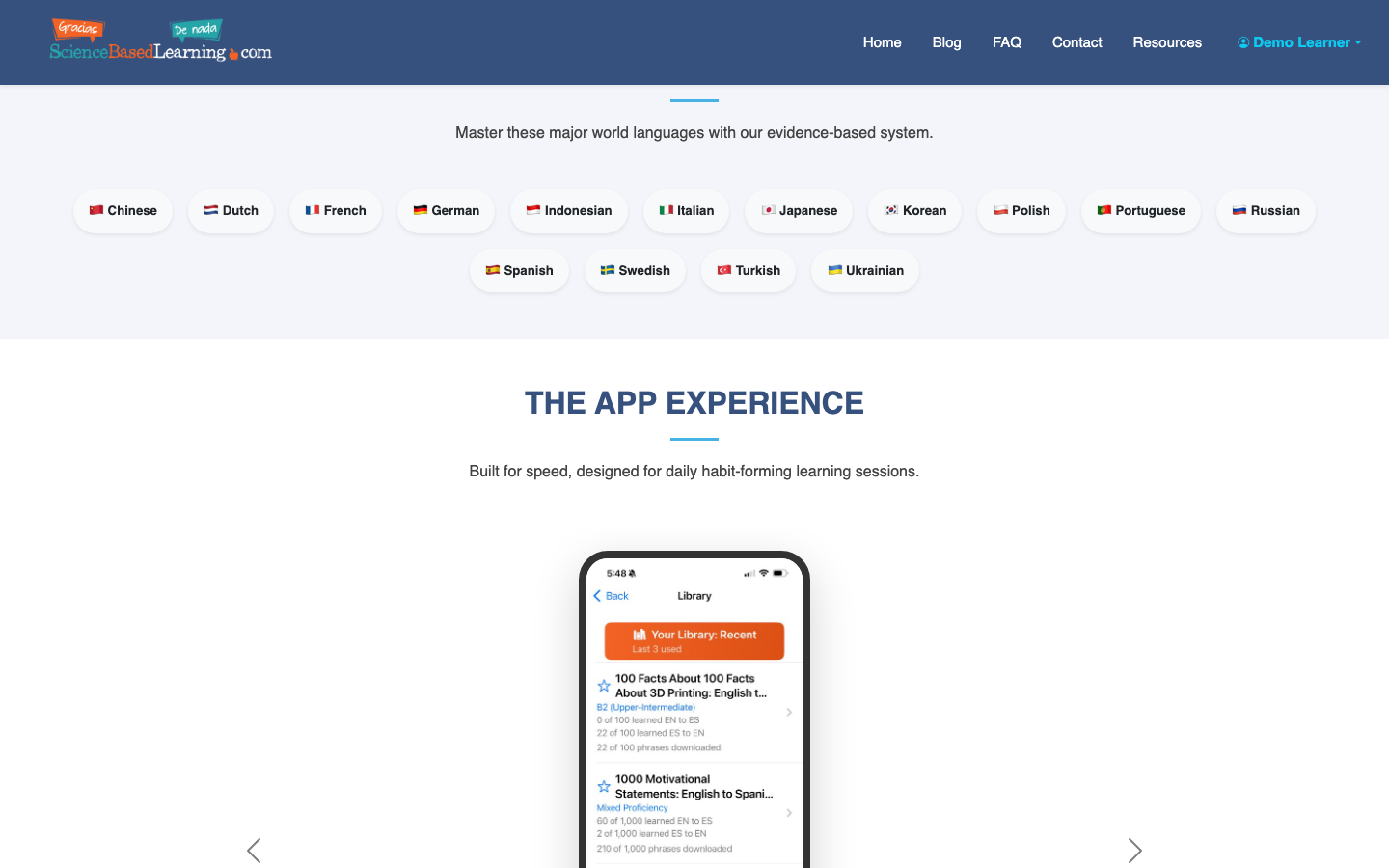
In Science Based Learning, choose your target language and level first so your vocabulary practice fits your current CEFR range instead of jumping between beginner and advanced words.
A useful starter target is:
- A1-A2: greetings, numbers, food, directions, routines, common verbs.
- B1-B2: opinions, plans, work, travel problems, short stories, connectors.
- C1-C2: nuance, idioms, argumentation, academic or professional vocabulary.
This matters because memory improves when the word has a job. “I need this word to say something” is much stronger than “this word appeared on a list.”
Step 2: Put New Words Into a Daily Study Loop
Vocabulary sticks when new words and review words live in the same routine. A good daily session should include a few new words, a review of older words, and one context activity such as listening, reading, or speaking.
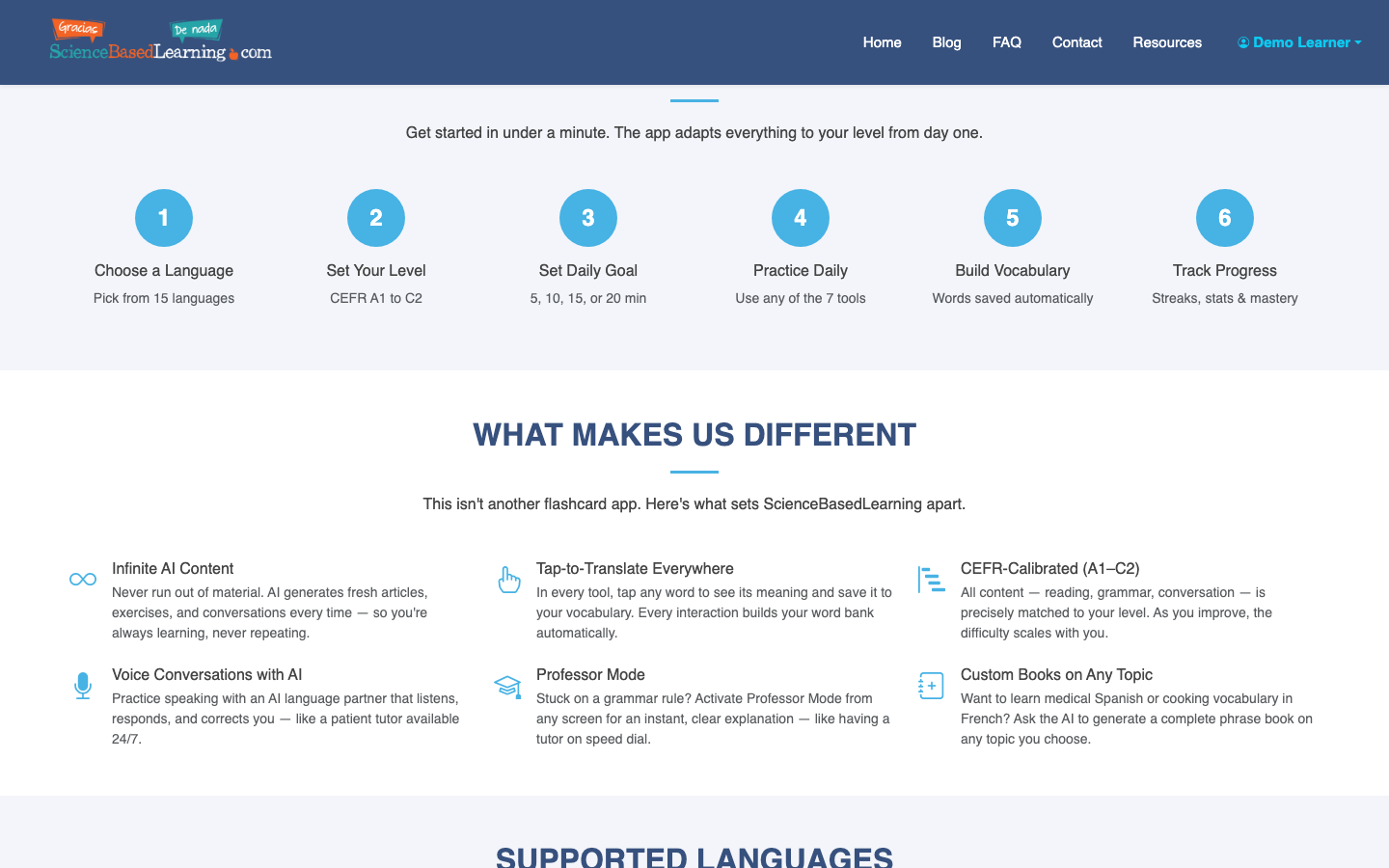
Science Based Learning is built around a 10-15 minute routine, which is the right size for most learners who want consistency without turning language study into a second job.
A simple daily split looks like this:
- Spend 3-5 minutes reviewing due flashcards.
- Add 5-10 new words.
- Spend 5 minutes using some of them in listening, reading, or conversation practice.
That last part is important. Flashcards help you remember the form and meaning. Context helps you understand when the word sounds natural.
Step 3: Use Spaced Repetition Instead of Cramming
Spaced repetition means you review a word at expanding intervals: soon after learning it, then a day later, then several days later, then weeks later. The timing is based on a simple idea: review just before forgetting.
A rough manual schedule would be:
- First review: same day.
- Second review: next day.
- Third review: 3-4 days later.
- Fourth review: 1-2 weeks later.
- Later reviews: monthly or when you miss the word.
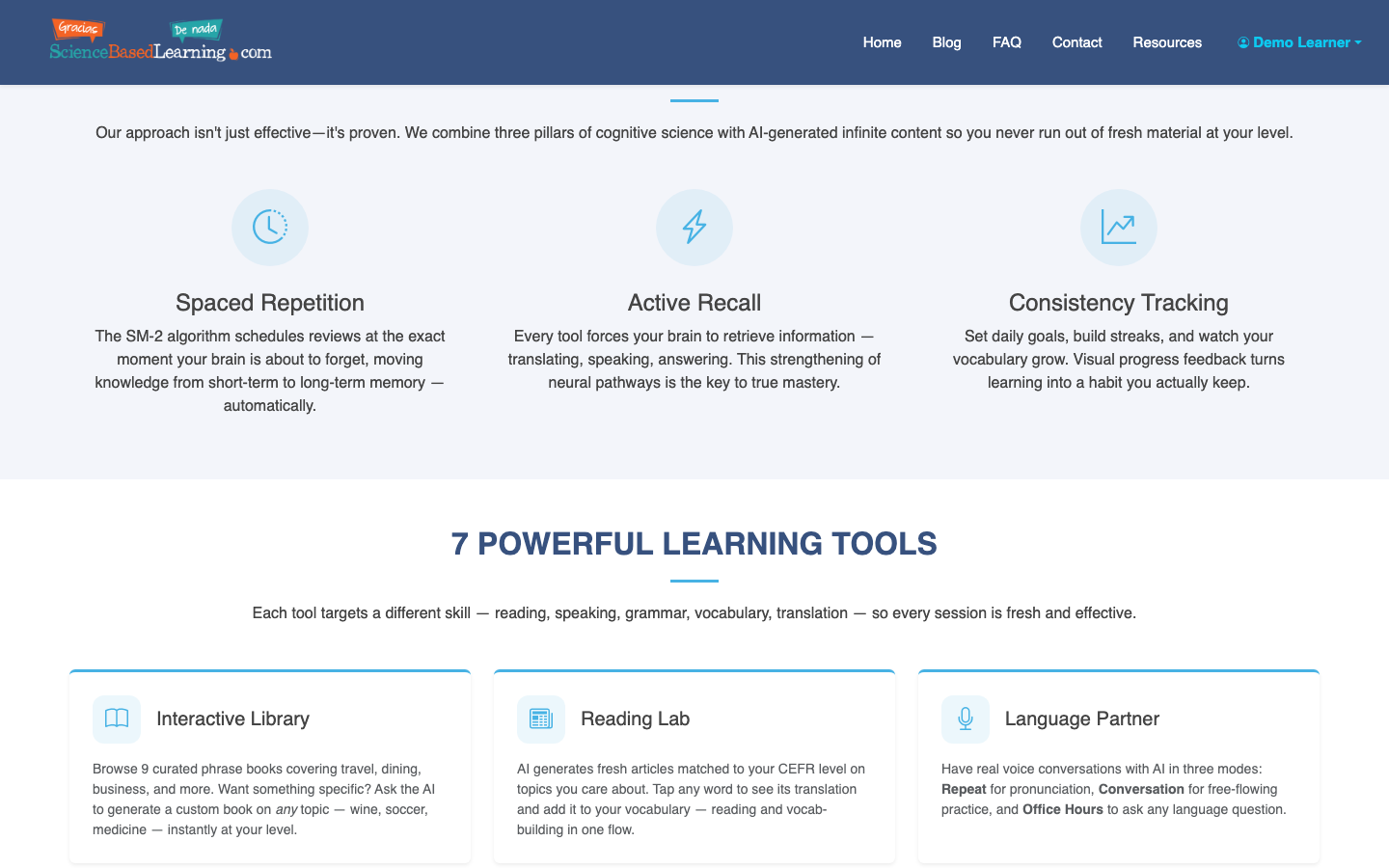
An app can handle this scheduling for you, which removes the hardest part: deciding what to review each day. In Science Based Learning, spaced-repetition flashcards are one of the core study tools, so your older words keep coming back without you rebuilding lists by hand.
Step 4: Test Recall Before Recognition
Recognition is easier than recall. You may recognize that “comer” means “to eat” when you see it, but still fail to produce it when you want to say “I eat breakfast.” For vocabulary memory, recall practice is the stronger exercise.
When reviewing a word, pause before checking the answer. Ask yourself:
- What does this word mean?
- How is it pronounced?
- Can I use it in a short sentence?
- Do I know a related word, phrase, or opposite?
For languages with unfamiliar sounds, pronunciation feedback helps turn passive vocabulary into speakable vocabulary. For languages with different grammar patterns, grammar puzzles can show how a word behaves inside real sentences.
If you are working on Spanish specifically, you can pair this routine with the broader study structure in How to Learn Spanish Fast. If you are still choosing a method, How to Learn a Language Fast covers the bigger picture.
Step 5: Add Context Immediately
A word learned in isolation is fragile. A word heard in a sentence, read in a short passage, and used in a reply has more memory hooks.
After learning a new word, try one of these:
- Write one sentence using it.
- Say a sentence out loud.
- Listen for it in a short audio drill.
- Find it in a graded reading passage.
- Use it in an AI conversation exchange.
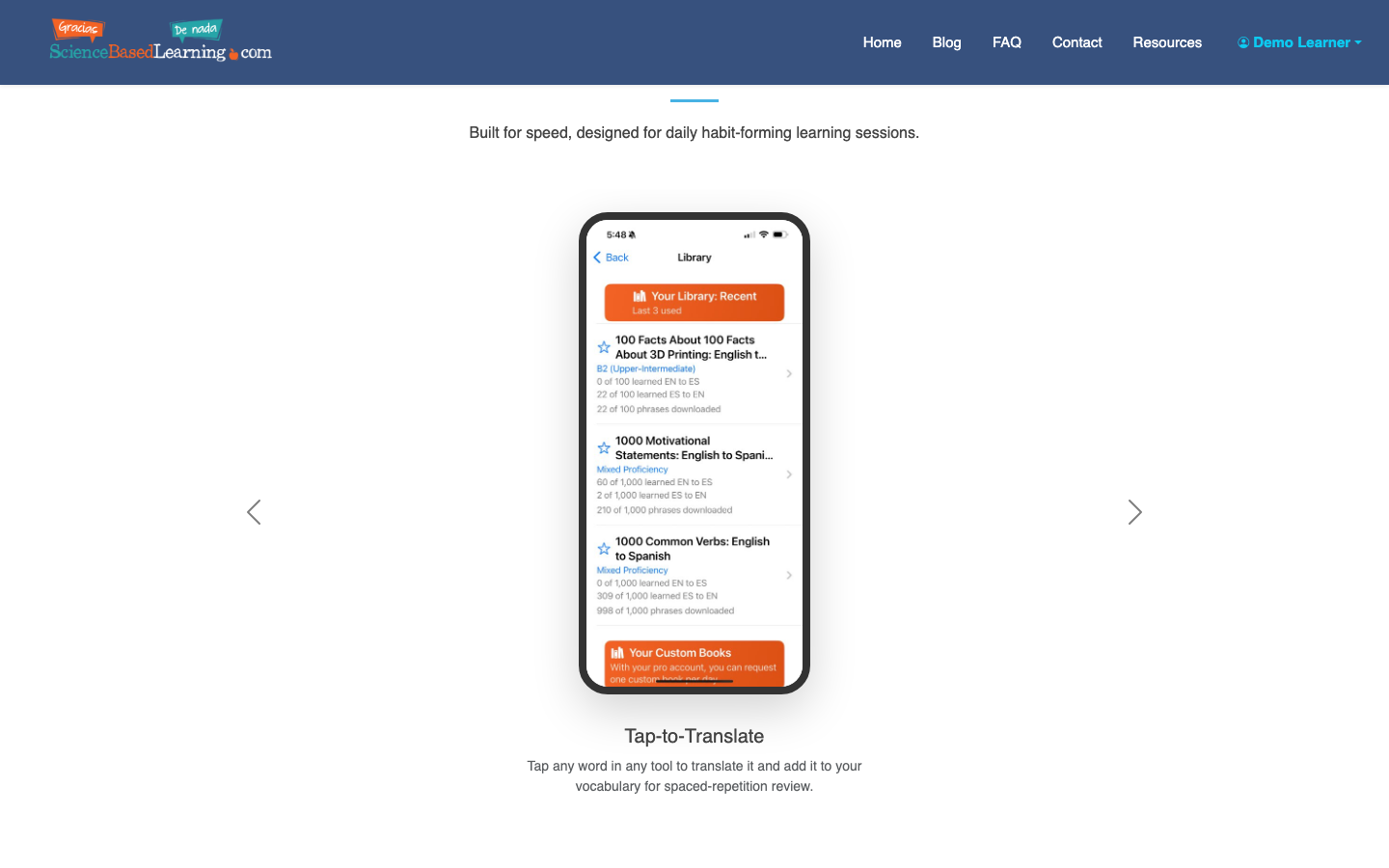
Science Based Learning combines flashcards with AI conversation practice, listening drills, reading comprehension, grammar puzzles, and pronunciation feedback, so you can move from “I recognize this” to “I can use this.”
Step 6: Keep Your Daily Word Count Sustainable
If you add 30 new words every day, you are not only learning 30 words. You are creating future reviews for all 30. That is why vocabulary systems often fail after the first week: the review pile grows faster than the habit.
A practical rule:
- 5 new words/day if the language is difficult for you or you are busy.
- 10 new words/day for steady growth.
- 15-20 new words/day if you already have a strong routine.
- 25+ new words/day only for short exam sprints, and expect heavier review.
For example, 10 words per day is about 300 words per month before missed days and forgotten items. That is meaningful progress, especially when the words are tied to speaking, listening, and reading.
Step 7: Review Missed Words Differently
When you miss a word, do not just flip the card and move on. Fix the reason you missed it.
Common fixes:
- If two words look similar, compare them side by side.
- If pronunciation is the issue, say it aloud three times and check feedback.
- If the meaning is vague, add a specific example sentence.
- If you understand it but cannot produce it, practice from English to the target language.
- If it keeps failing, reduce the hint or make the card simpler.
This is where a structured app helps, but the principle works anywhere: missed words need diagnosis, not guilt.
A Simple 7-Day Vocabulary Plan
Use this for one week before changing anything:
- Day 1: Add 10 useful words and review them the same day.
- Day 2: Review yesterday’s words, add 10 more, use 3 in sentences.
- Day 3: Review due words, do one short listening drill.
- Day 4: Add 5-10 new words, use older words in conversation practice.
- Day 5: Review missed words and adjust examples.
- Day 6: Read a graded text and save useful words.
- Day 7: Review only. No new words unless your due pile is light.
If you are learning Korean, Japanese, Arabic, Mandarin, or another language with extra writing or pronunciation load, slow the new-word count and spend more time on sound and script. For Korean learners, How to Learn Korean Fast gives a more language-specific path.
If a word is easy to recognize but hard to say, add a pronunciation pass instead of only adding more flashcards. How to Improve Your Pronunciation gives you a focused routine for hearing, recording, and correcting difficult sounds. Japanese learners can also connect this vocabulary loop with the study sequence in How to Learn Japanese Fast.
Why This Works
Vocabulary memory improves when your brain has to retrieve a word, not just re-read it. Spaced repetition supplies the timing. Recall supplies the effort. Context supplies meaning. A daily habit supplies enough repetitions over time.
So, how do you memorize vocabulary words? You stop treating memorization as one long study session. You build a loop: choose useful words, review them before they fade, test yourself honestly, and use them in real language every day.
